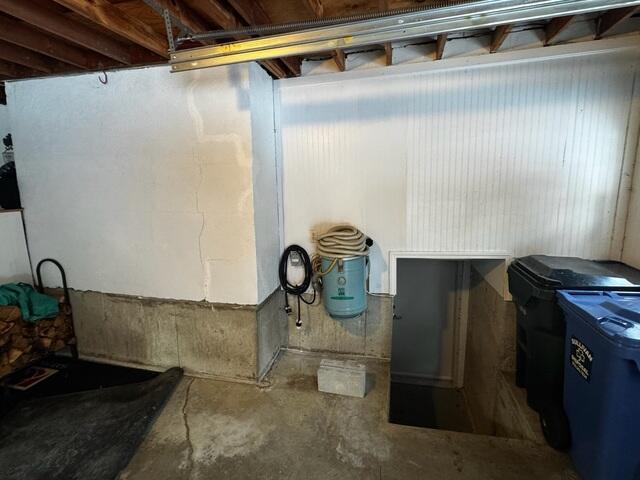
Wall Crack
The homeowner knew an area of their home was settling when purchasing the home. This was evidenced by a wall crack in the foundation.
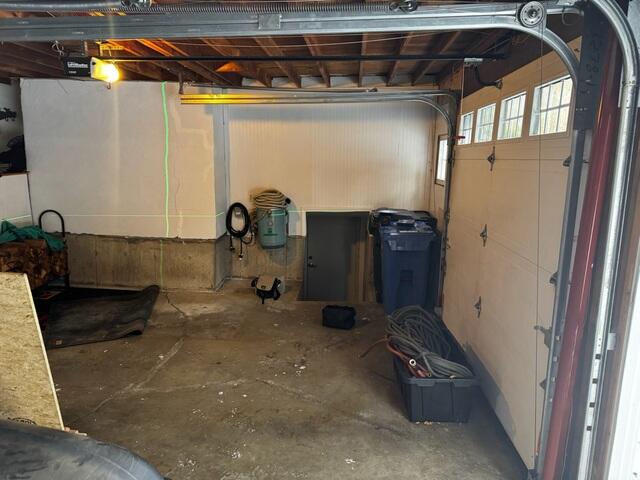
Sunken Garage Floor
Our Design Specialist employed a laser level to accurately assess the extent of settlement. As illustrated in the accompanying photo, the garage corner exhibited noticeable subsidence.
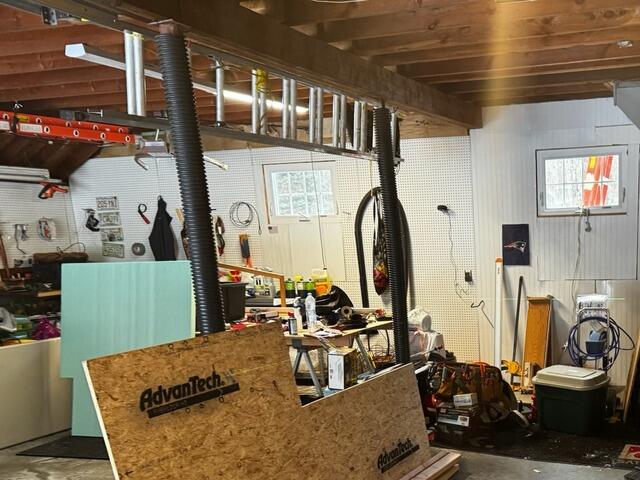
Failing Lally Columns
The lally columns in the garage were no longer providing adequate structural support to the floor joists above. This compromised the load-bearing capacity of the system, resulting in noticeable floor deflection and a bouncy, uneven surface in the rooms above.
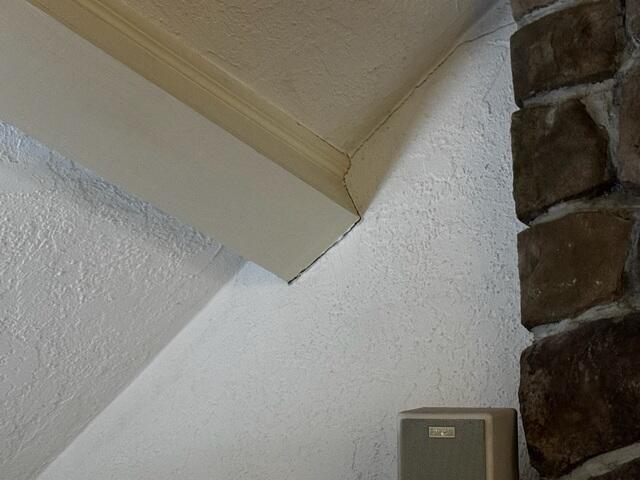
Evidence of Settlement in Home
Widespread cracking was observed throughout the home, with fractures propagating along joists and extending into the interior drywall. This pattern of damage is consistent with structural movement and provides further evidence of ongoing foundation settlement.
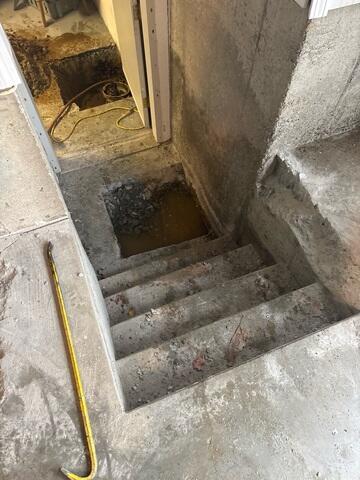
Push Pier Foundation Excavation
To address the foundation settlement and achieve long-term structural stabilization, our crew initiated the installation of Push Piers. The first phase of this process involves excavating targeted sections of the foundation slab and underlying soil to expose the footing, allowing for proper placement of the pier brackets beneath the structure.
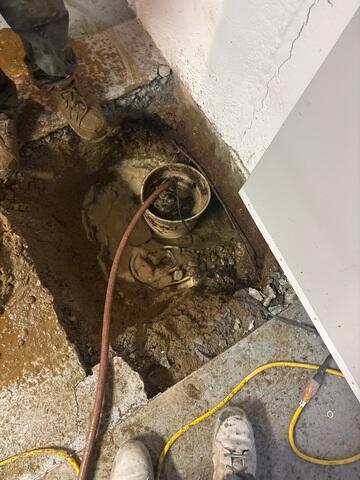
Push Pier Water Removal
Due to a high water table beneath the foundation slab, the excavated areas experienced significant water accumulation. To maintain a safe and efficient work environment, our team deployed a portable sump pump system to effectively manage groundwater intrusion and facilitate uninterrupted progress on the installation.
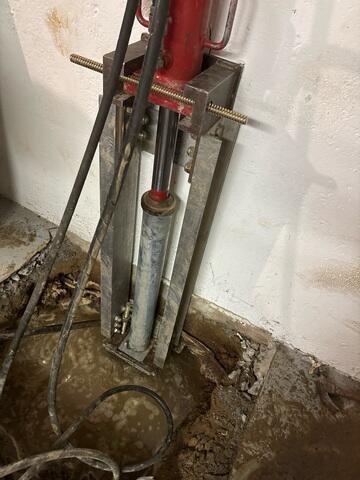
Push Pier Driven into Soil
Steel foundation brackets were securely anchored to the footing, and hydraulically driven push piers were advanced deep into the soil strata until reaching competent, load-bearing material capable of supporting the structural load.
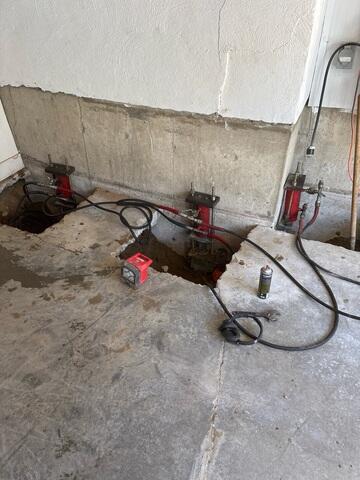
Push Piers Pressurized
After the push piers were driven to the designated load-bearing stratum, hydraulic pressure was applied uniformly across the system to elevate the structure. This process successfully restored the foundation to its original elevation, correcting a settlement of approximately two inches.
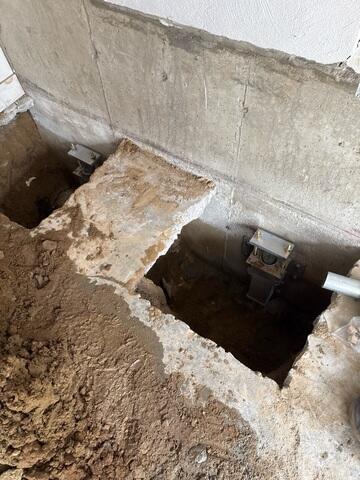
Push Pier Completed Installation
With the successful installation of the push pier system, the foundation is now permanently stabilized, having been transferred to competent load-bearing strata. This ensures long-term structural integrity and mitigates the risk of future settlement.
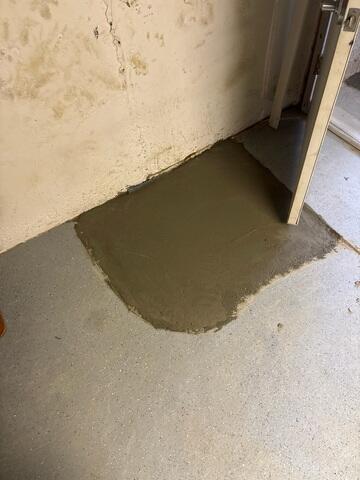
Push Pier Backfill and Concrete
The previously excavated areas were systematically backfilled with suitable material and compacted, followed by the application of concrete to restore the surface to finished grade.
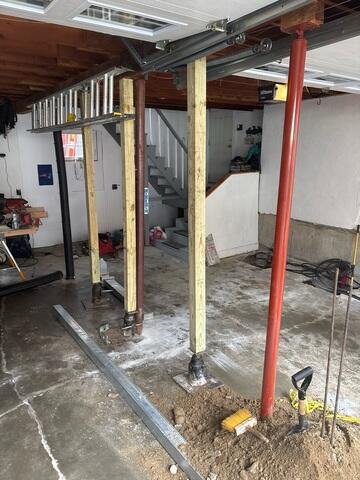
Lally Column Removal
To ensure structural stability during the SmartJack installation, our crew installed temporary support columns prior to the removal of the deteriorated lally columns. This precautionary measure maintained load transfer and alignment throughout the process.
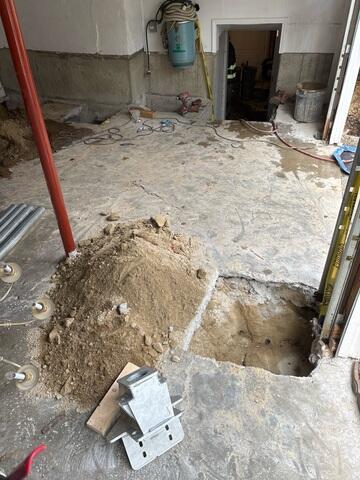
Excavation of Foundation Floor for SmartJack Footing
Concrete was carefully removed at the designated SmartJack installation point to allow for the excavation and preparation of a proper footing to support the system.
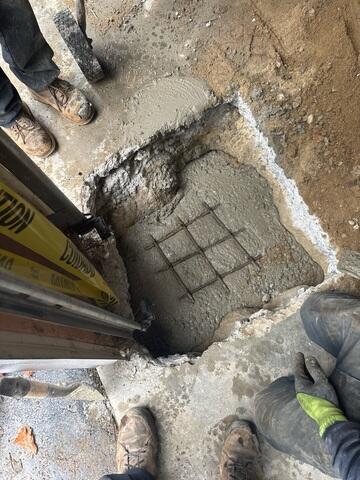
SmartJack Footing Reinforced with Rebar
Following the removal of existing concrete and underlying soil, the area was reinforced with rebar and subsequently poured with high-strength concrete to form a structurally sound footing capable of supporting the SmartJack system.
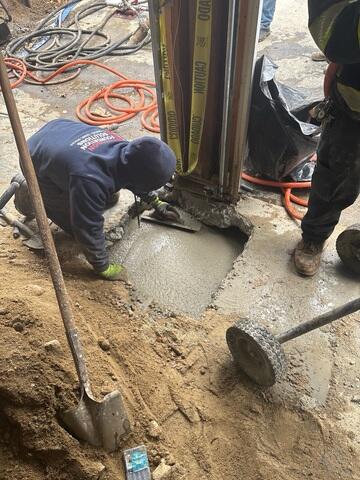
SmartJack Footing Leveled
The concrete footing was then finished to a level grade to ensure a stable and even surface for the SmartJack installation.
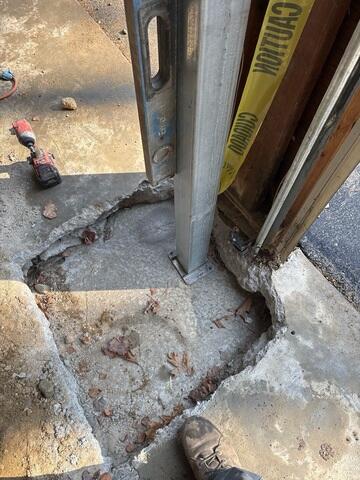
SmartJack Base on Footing
The SmartJack base was precisely positioned on the prepared concrete footing, and the adjustable steel post was securely mounted to the base to ensure optimal load transfer and structural support.
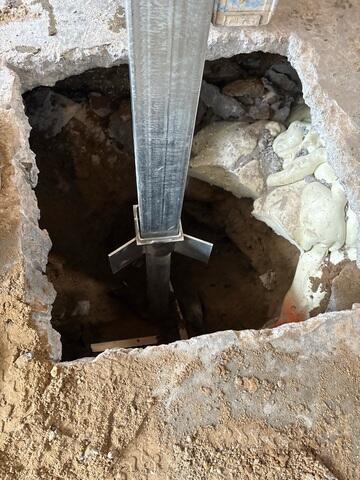
SmartJack on Concentric Pier
This SmartJack was installed atop a concentric push pier that had been hydraulically driven into competent, load-bearing soil. This approach was necessary due to the planned removal of the surrounding concrete, ensuring that the SmartJack would remain supported independently. The combined use of reinforced footings and deep-driven piers provides a stable and reliable foundation for long-term structural support.
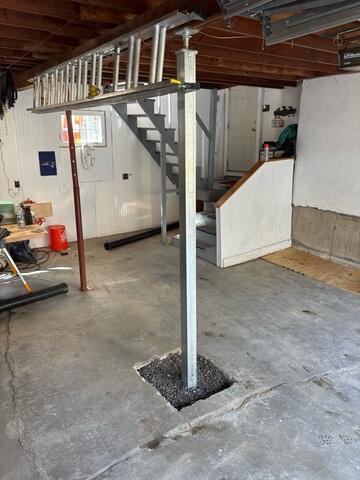
SmartJack Installed to Main Beam
A structural bracket was affixed to the SmartJack post, which was then precisely adjusted to engage the main support beam beneath the floor system. This adjustment provided targeted lift and stabilization, effectively transferring load to the SmartJack and restoring proper alignment to the floor joists above. The excavated area was then backfilled with crushed stone.
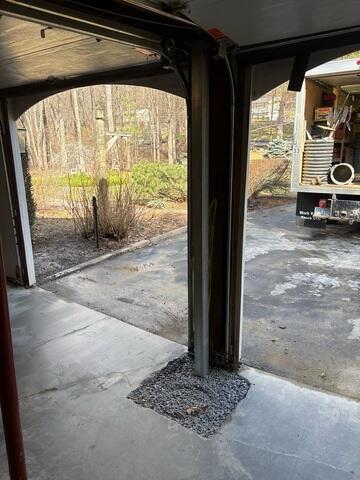
SmartJack Backill Continued
The second SmartJack followed the same installation process.
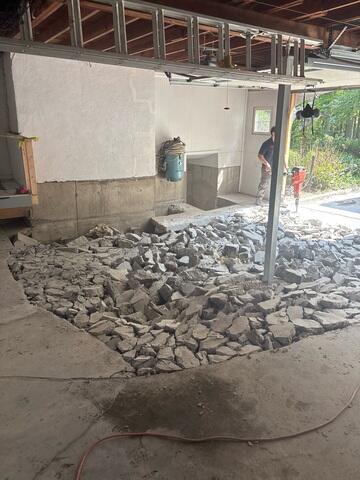
Concrete Excavation
The previously settled section of the garage slab exhibited extensive structural damage, rendering repair unfeasible without removal. Our crew proceeded with the controlled demolition and removal of the compromised concrete to prepare the area for reconstruction.
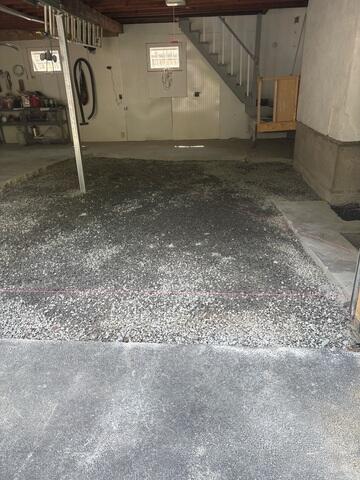
Crushed Stone Garage Base
A layer of compacted crushed stone was placed in the excavated area to establish a stable and well-drained sub-base, providing proper support for the subsequent concrete pour.
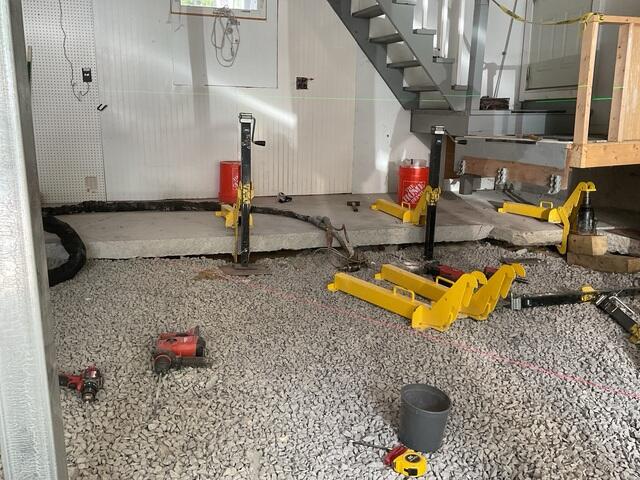
Slab Jacks
Slab jacking equipment was employed to hydraulically lift and re-level the settled concrete slabs, restoring them to their original elevation.
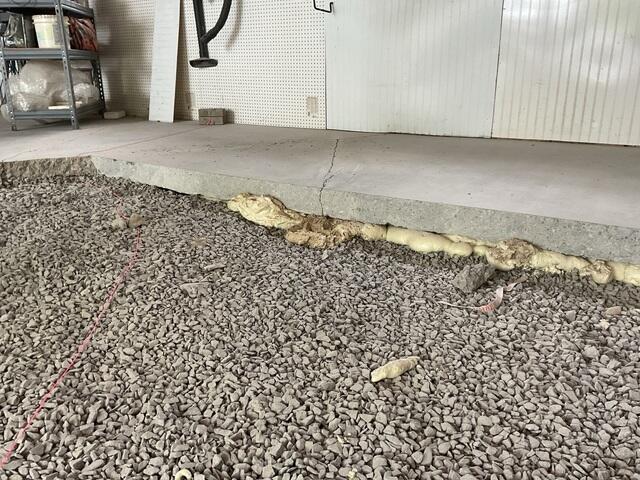
PolyLevel
PolyLevel, a high-density polyurethane foam, was injected beneath the concrete slabs to fill underlying voids and stabilize the subgrade. This process ensures long-term slab support and maintains proper elevation by preventing future settlement.
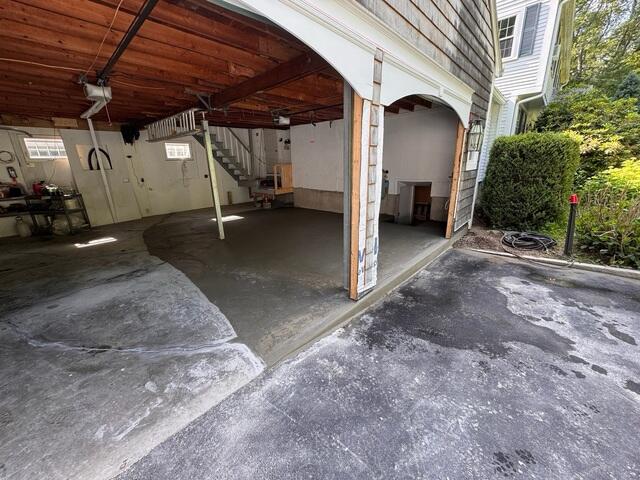
Concrete Slab Pour
Formwork was carefully constructed to define the boundaries and ensure the correct configuration of the concrete pour. Once in place, concrete was placed, leveled, and finished to match the surrounding grade. The contrast between the newly poured garage floor and the adjacent driveway clearly illustrates the extent of the previous settlement that has now been successfully corrected.
NexusPro
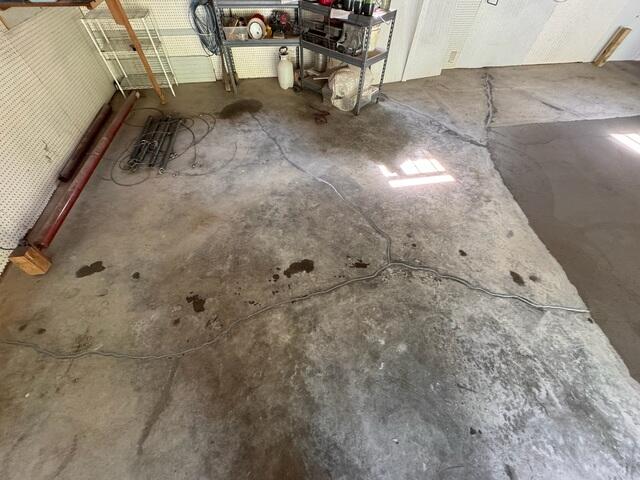
NexusPro, a high-performance silicone-based sealant, was applied to existing cracks to effectively prevent moisture infiltration and protect the structural integrity of the concrete over the long term.