Chimney Stabilization in Carlisle, MA
Challenge
Background & Homeowner Concerns
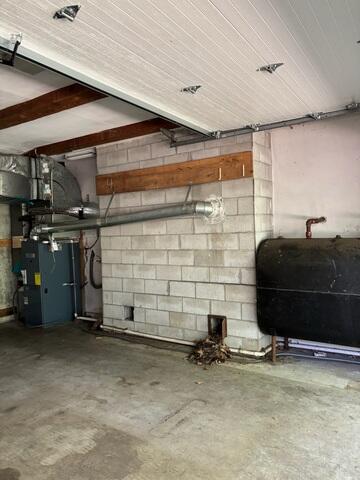
A homeowner in Carlisle, MA, became increasingly concerned after noticing that their chimney was visibly leaning and separating from the side of their home. What began as small signs of movement eventually developed into a clear structural issue that could no longer be ignored. The separation between the chimney and the house had become noticeable, raising concerns about both safety and the long-term stability of the structure.
In addition to the separation, significant stair-step cracking had formed throughout the chimney masonry. These cracks were a strong indication that the chimney was moving independently of the home due to settlement occurring beneath its foundation. As settlement continued, the risk of additional masonry damage, compromised structural integrity, water intrusion, and potential chimney failure increased.
Like many homeowners experiencing foundation-related settlement issues, the homeowner understood that cosmetic repairs alone would not solve the problem. Simple crack repairs or masonry patching would only mask the symptoms while the underlying structural movement continued. Wanting a permanent solution that would protect their property's value and eliminate concerns about future settlement, they contacted Erickson Foundation Solutions for a professional evaluation.
Following their call, one of our Customer Care Specialists promptly scheduled a comprehensive inspection. A System Design Specialist visited the property to perform a detailed assessment and determine the cause of the chimney's movement.
Inspection & Diagnosis
During the inspection, several key indicators of foundation settlement were identified.
The most obvious symptom was the visible separation between the chimney structure and the exterior wall of the home. This type of displacement often occurs when a chimney settles at a different rate than the adjacent structure. Because many chimneys are supported by independent footings, they can become vulnerable to settlement when the supporting soils beneath those footings lose bearing capacity.
The inspection also revealed substantial stair-step cracking throughout the chimney's brick masonry. Stair-step cracking frequently follows mortar joints and is one of the most recognizable signs of differential settlement in masonry structures. As portions of the chimney footing settle unevenly, tension forces develop within the brickwork, causing these characteristic crack patterns.
Additional observations included:
- Vertical displacement within the masonry structure.
- Evidence that settlement was ongoing rather than historical.
- Minor gaps forming where the chimney connected to the home.
- Load transfer issues caused by soil movement beneath the footing.
- Structural stresses throughout the chimney shaft resulting from uneven support conditions.
After evaluating the chimney's condition and investigating the supporting foundation system, it was determined that the root cause was foundation settlement resulting from unstable soils beneath the chimney footing.
Over time, near-surface soils can become compressed, weakened, or displaced due to changes in moisture content, seasonal freeze-thaw cycles, poor compaction during original construction, or natural soil consolidation. As these upper soil layers lose their load-bearing capacity, the footing begins to settle, causing the attached structure to sink and shift.
Without intervention, the chimney would likely continue to move, placing additional stresses on the masonry and increasing the risk of more extensive structural damage.
To permanently stabilize the chimney and potentially recover a portion of the lost elevation, Erickson Foundation Solutions recommended the installation of a Push Pier System.
Proposed Solution: Push Pier Foundation Stabilization
To address the settlement issues and restore structural support to the chimney, Erickson Foundation Solutions designed a repair plan utilizing:
4 Push Piers Total
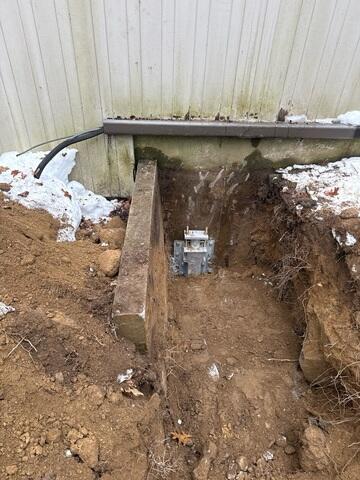
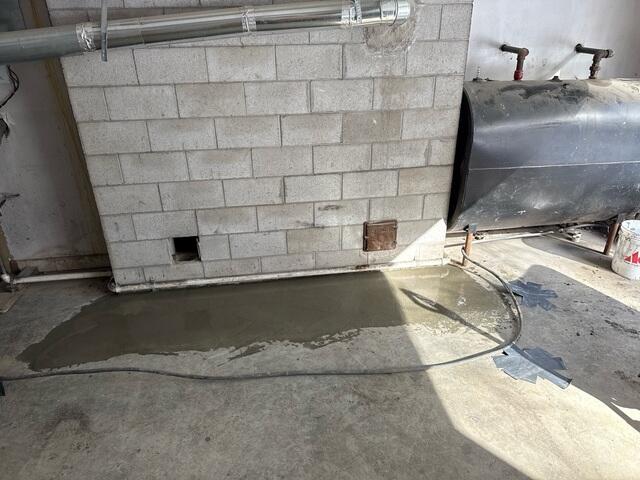
- 3 interior push piers installed beneath the chimney footing
- 1 exterior push pier installed adjacent to the foundation wall to provide additional structural support and load distribution
Push Piers are one of the most effective foundation stabilization methods available for structures affected by settlement. Unlike surface-based repairs, push piers transfer the weight of a structure past unstable upper soils and onto deeper, competent load-bearing strata capable of supporting the structure permanently.
This engineered deep foundation system not only stabilizes ongoing settlement but can often allow for controlled lifting of the structure back toward its original position, depending on structural conditions.
Because the chimney had already experienced measurable settlement and displacement, Push Piers offered the ideal solution for both stabilization and elevation recovery.
Solution
Installation Process & System Details
Site Preparation and Footing Access
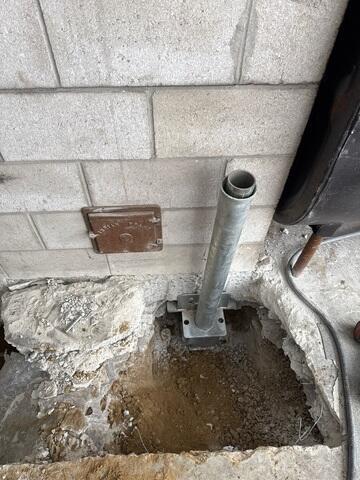
The repair process began by creating access to the chimney footing.
Sections of the existing concrete floor were carefully removed, and underlying soils were excavated to expose the chimney foundation. This step allowed the installation crew to directly access the footing and properly position each pier bracket beneath the structure.
Careful excavation was critical to ensure the footing could be safely supported throughout the installation process while minimizing disruption to the surrounding area.
Throughout the excavation phase, the installation crew continually monitored footing conditions and verified that the foundation was suitable for pier attachment.
Push Pier Installation
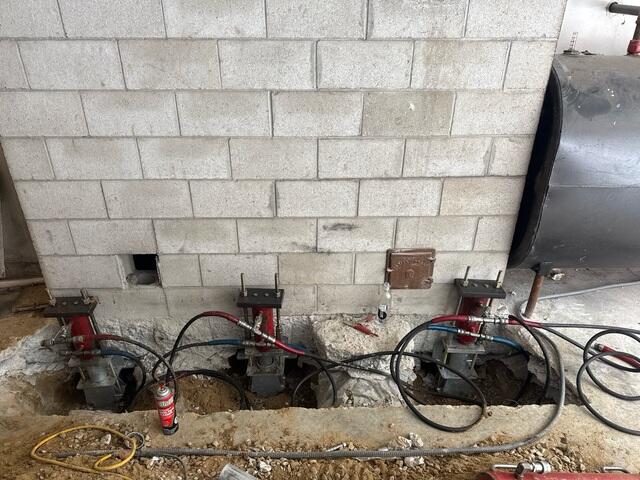
Once the footing was fully exposed, heavy-duty galvanized steel foundation brackets were securely attached to the chimney footing.
With the brackets installed, engineered steel pier sections were hydraulically advanced into the ground. Using specialized hydraulic equipment, each steel tube section was driven deeper and deeper beneath the structure as additional sections were mechanically connected.
Unlike conventional shallow foundation repairs, Push Piers derive their support from deeper load-bearing soils, allowing the structure's weight to bypass unstable soils near the surface.
The pier installation continued until each pier achieved sufficient installation pressure, confirming that competent bearing strata had been reached. This verification process is one of the most important aspects of push pier technology because it provides measurable confirmation that the system is bearing on stable material capable of supporting structural loads.
Reaching competent load-bearing strata ensures:
- Long-term structural support
- Protection against future settlement
- Consistent load transfer
- Greater structural reliability
- Improved overall foundation performance
The three interior push piers and the additional exterior push pier were installed simultaneously as part of one integrated stabilization system, ensuring load transfer occurred evenly throughout the chimney support area.
Settlement Recovery and Controlled Lift
After all push piers reached their target bearing capacity, the next phase involved addressing the settlement that had already occurred.
The piers were hydraulically synchronized and carefully pressurized in unison. By applying controlled upward force, the installation team was able to gradually recover settlement-related movement and raise the chimney toward its original elevation.
Lifting operations are always performed slowly and methodically to protect the structure and allow technicians to monitor its response throughout the process.
During the recovery process, measurements were continuously observed to ensure safe and effective movement.
As a result of the pier installation and coordinated lifting procedure, the chimney was successfully raised approximately 1 inch. This recovery helped close the separation between the chimney and the home while reducing stresses within the masonry structure.
Although complete restoration to original elevation is not always achievable due to existing structural conditions, recovering even a portion of the settlement often provides significant structural and cosmetic benefits.
Permanent Stabilization
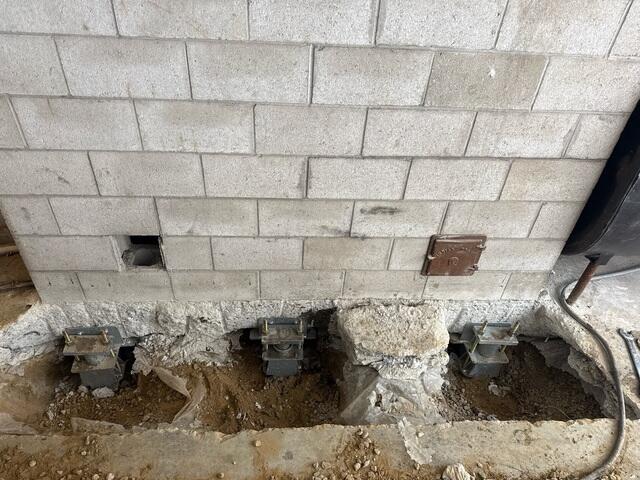
Once the desired elevation had been achieved, the push pier system was permanently secured.
Locking caps were installed at each pier location, creating a fixed connection between the foundation brackets and the steel pier system. This permanently transferred the chimney's load away from unstable near-surface soils and onto the deeper load-bearing strata where the piers were founded.
With the load now supported by competent soils deep below the structure, the chimney gained long-term protection against future settlement-related movement.
This step transforms the pier system from a lifting mechanism into a permanent structural support system designed to protect the chimney for decades to come.
Restoration and Final Finishing
After all stabilization work was completed, attention turned to restoring the property.
Excavated areas were carefully backfilled and compacted to restore proper support around the foundation. Any disturbed concrete sections were replaced and finished to blend with the existing concrete surfaces and elevations.
The work area was thoroughly cleaned, and the property was returned to a safe and functional condition.
Because much of the repair work occurred below the surface, only minimal evidence of the installation remained visible after the project was completed.
Results & Long-Term Benefits
The installation of four Push Piers successfully stabilized the chimney and permanently addressed the foundation settlement responsible for its movement.
Most importantly, the chimney was lifted approximately 1 inch, significantly reducing the visible separation between the chimney and the home while improving overall structural alignment.
The completed repair delivered several important benefits:
Permanent Stabilization
The chimney is now supported by deep load-bearing strata rather than unstable surface soils, preventing future settlement-related movement.
Structural Preservation
By eliminating ongoing settlement, the repair protects the masonry structure from additional cracking, displacement, and deterioration.
Restored Load Distribution
Structural loads are now transferred efficiently through the push pier system into competent supporting soils.
Increased Safety
The risk associated with a leaning and separating chimney has been greatly reduced, providing enhanced structural security.
Improved Property Value
Addressing the root cause of foundation settlement helps preserve both the market value and long-term durability of the home.
Long-Term Peace of Mind
The homeowner can feel confident knowing that the settlement issue has been permanently addressed with an engineered repair solution designed to perform for the life of the structure.
Through careful engineering, precise installation, and proven foundation stabilization technology, Erickson Foundation Solutions successfully transformed a visibly settling chimney into a stable, secure structure capable of providing reliable performance for years to come.
Project Summary
Crew Foreman: Drew S.
Systems Installed: Push Piers