Comprehensive Radon Mitigation, Air Quality Improvement & Crawl Space Encapsulation in Hollis, NH
Challenge
Background & Homeowner Concerns
Radon gas—an invisible, odorless radioactive contaminant—is the second leading cause of lung cancer in the United States. In southern New Hampshire, including Hollis, elevated radon levels are especially common due to granite-rich soil conditions. In this historic 1804 home, long‑term radon testing revealed concentrations averaging approximately 10 pCi/L, well above the EPA’s recommended action level of 4.0 pCi/L.
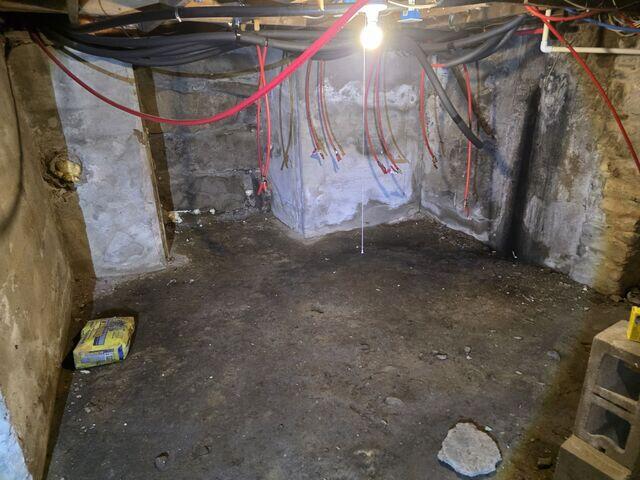
In addition to radon exposure, the homeowner faced persistent moisture intrusion within multiple crawl space areas, resulting in damp conditions, musty odors, and elevated humidity that negatively affected indoor air quality and nearby mechanical systems. Water seepage through foundation walls and exposed soil contributed to deteriorating conditions that threatened both the home’s structural longevity and overall living environment.
Recognizing the seriousness of these combined radon, air quality, and crawl space issues, the homeowner contacted Erickson Foundation Solutions—experts in radon mitigation, crawl space encapsulation, and indoor air quality solutions.
Inspection & Diagnosis
Our Customer Care Team scheduled a complimentary inspection, which was performed by one of our experienced System Design Specialists. During the inspection, the specialist conducted:
- Crawl space moisture and vapor intrusion evaluation
- Assessment of an existing sump pump system
- Review of a previously installed vapor liner
The inspection revealed that moisture infiltration through foundation walls and exposed crawl space soil was driving persistently high humidity levels. These conditions produced musty odors, increased wood decay risk, and reduced the crawl space’s suitability for safe storage.
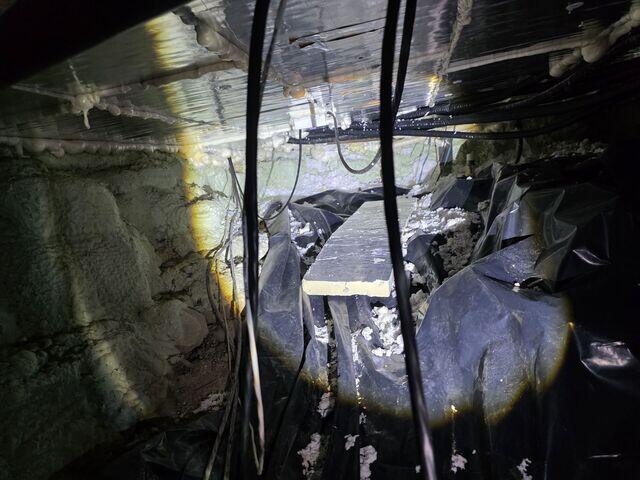
In another section of the crawl space, a generic vapor liner had been previously installed. The liner was thin, poorly sealed, and improperly fitted—allowing moisture to continue migrating into the space. This ineffective attempt at moisture control demonstrated the need for a professionally installed, heavy‑duty crawl space encapsulation system.
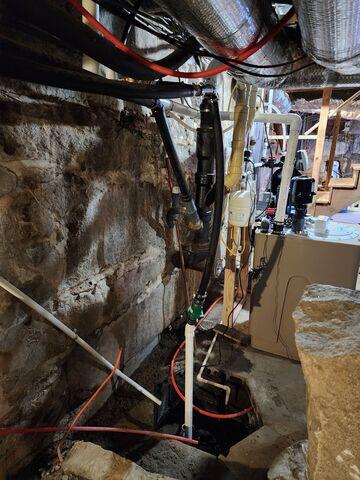
Additionally, the existing sump pump had no sealed cover, allowing moisture vapor and radon‑laden soil gases to freely enter the basement. This open sump pit significantly contributed to both elevated humidity and increased indoor radon levels by acting as a direct communication point with the soil beneath the foundation.
Proposed Integrated Solution
Based on the inspection findings, a comprehensive, multi‑system solution was designed to address radon mitigation, moisture control, crawl space encapsulation, and indoor air quality. The approved solution included:
- 2 Radon Mitigation Systems
- 1 Energy Recovery Ventilator (ERV)
- 490 sq. ft. of CleanSpace® crawl space encapsulation
- 1 Custom airtight sump pump cover
Solution
Installation Process & System Details
Crawl Space Encapsulation with CleanSpace®
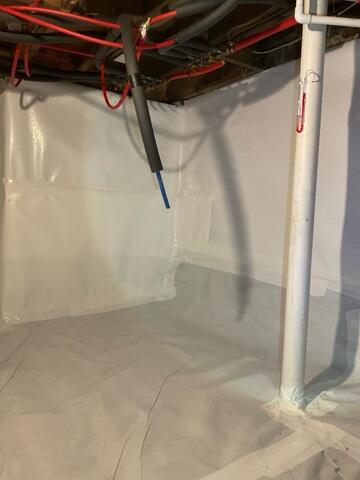
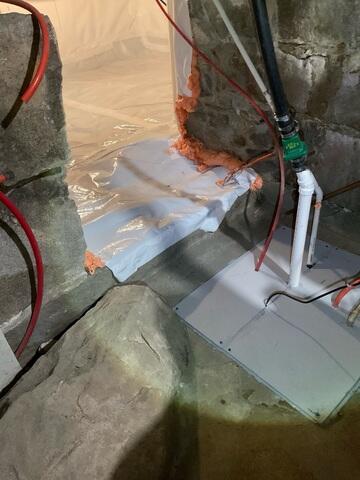
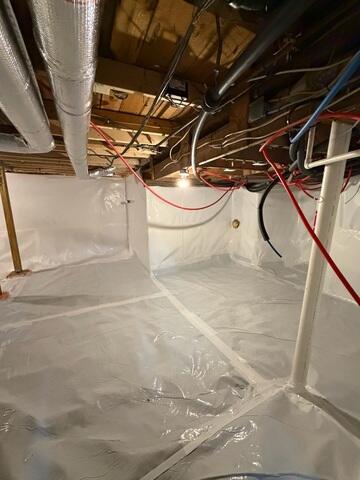
A total of 490 square feet of CleanSpace® vapor barrier was professionally installed along crawl space floors and foundation walls. Unlike generic vapor liners, CleanSpace® is a thick, reinforced, puncture‑resistant encapsulation system engineered to provide long‑term moisture and vapor control.
The liner was carefully sealed at seams, mechanically secured to the walls, and sealed around all penetrations to create a continuous barrier. This encapsulation prevents ground moisture from evaporating into the crawl space, helping to control humidity, reduce musty odors, and protect wooden structural components from decay. When properly installed, CleanSpace® also serves as an added defense against radon gas migration into the home.
Custom Sump Pump Sealing
To eliminate a major source of radon and moisture intrusion, a custom‑fitted, airtight sump pump cover was installed over the existing sump pit. This sealed liner prevents moisture vapor from escaping into the basement and blocks soil gases—including radon—from entering the living space. The cover also improves the overall efficiency of nearby radon mitigation systems by preserving proper pressure differentials beneath the home.
Dual Radon Mitigation Systems
Given the size, layout, and foundation complexity of this historic home, two radon mitigation systems were installed to ensure effective depressurization across all affected areas.
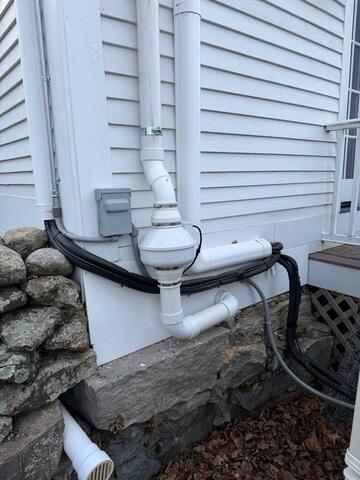
Each system includes a dedicated radon extraction point installed through the foundation, targeting radon‑laden soil beneath crawl spaces and slab areas. PVC piping was securely connected and routed through the home’s siding to the exterior.
High‑efficiency radon mitigation fans were installed outside the structure to actively induce sub‑slab and crawl space depressurization. These fans continuously draw radon gas from beneath the home and vent it safely outdoors.
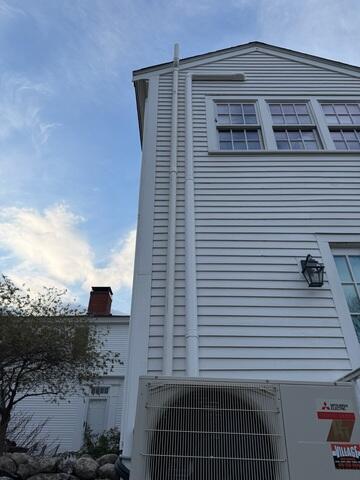
PVC vent piping was routed vertically above the roofline in accordance with accepted venting practices, ensuring radon gases are safely dispersed away from windows, doors, and re‑entry points—providing effective, long‑term radon reduction.
Indoor Air Quality Improvement with ERV
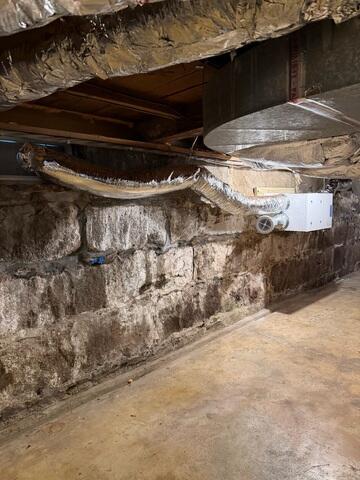
To further enhance indoor air quality and humidity control, one Energy Recovery Ventilator (ERV) was installed. The ERV continuously exchanges stale indoor air with fresh outdoor air while capturing and transferring up to 80% of the thermal energy from the outgoing air stream.
This process improves air quality, balances humidity levels, and increases overall energy efficiency—helping reduce heating and cooling costs while maintaining healthier indoor conditions.
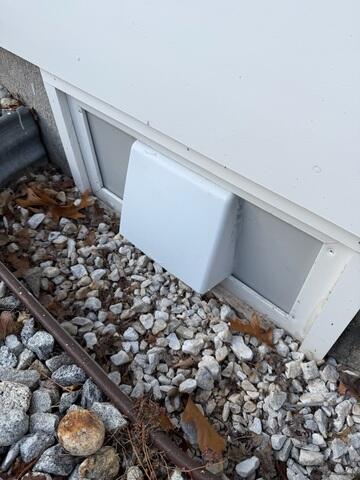
To ensure proper and safe exhaust, purpose‑built vent covers were installed over basement window openings, allowing controlled airflow while protecting the home from weather intrusion and pests.
Results & Homeowner Outcome
Upon completion of the project, the installation crew performed a full cleanup and conducted a detailed walkthrough with the homeowner. The results delivered immediate and long‑term benefits:
- Significantly reduced radon levels through dual radon mitigation systems
- Improved indoor air quality and humidity balance with ERV ventilation
- A dry, sealed crawl space protected by 490 sq. ft. of CleanSpace® encapsulation
- Reduced moisture vapor and radon infiltration via a custom airtight sump cover
The homeowner now benefits from a healthier indoor environment, improved energy efficiency, and a crawl space engineered for durability and long‑term protection.
Conclusion
This Hollis, NH project highlights Erickson Foundation Solutions’ ability to design and install integrated radon mitigation, air quality, and crawl space encapsulation solutions, even in historically significant homes. By addressing moisture, soil gases, and ventilation as a complete system, we delivered a safe, stable, and healthier home—reinforcing our commitment to protecting what matters most.
Another successful example of Erickson Foundation Solutions: truly the experts in “All Things Basementy.”
Project Summary
Crew Foreman: Tyler M
System Design Specialist: Bryan B
Systems Installed: Radon Mitigation System, ERV, CleanSpace, Custom Sump Pump Cover